Non-standard anti-capitalist philosophy publication.
-
The dominant tradition of ideological critique has struggled with this problem since at least Mannheim, who understood ideology as a kind of socially conditioned distortion, a partial perspective mistaken for a total one. The correction was, in principle, available: the free-floating intellectual. Marx’s own formulations oscillate between ideology as inverted image and ideology as material…
-
Non-Becoming confronts the one verb contemporary philosophy of the subject has left unquestioned. The critical critics have learned to dissolve every fixed identity and to celebrate every flux, every line of flight – and in doing so have made becoming the single concept immune to critique, an unquestioned standstill. This essay treats the imperative of…

-
This book provides the maths behind the program initiated by Peter Wolfendale and Reza Negarestani called “Neo-Rationalism.” My aim is to extend their program through these self-contained lecture-style notes in two parts. Part I develops categorical logic along the following arc: from Lawvere’s functorial semantics of algebraic theories, through the doctrinal hierarchy of logical fragments (cartesian,…

-
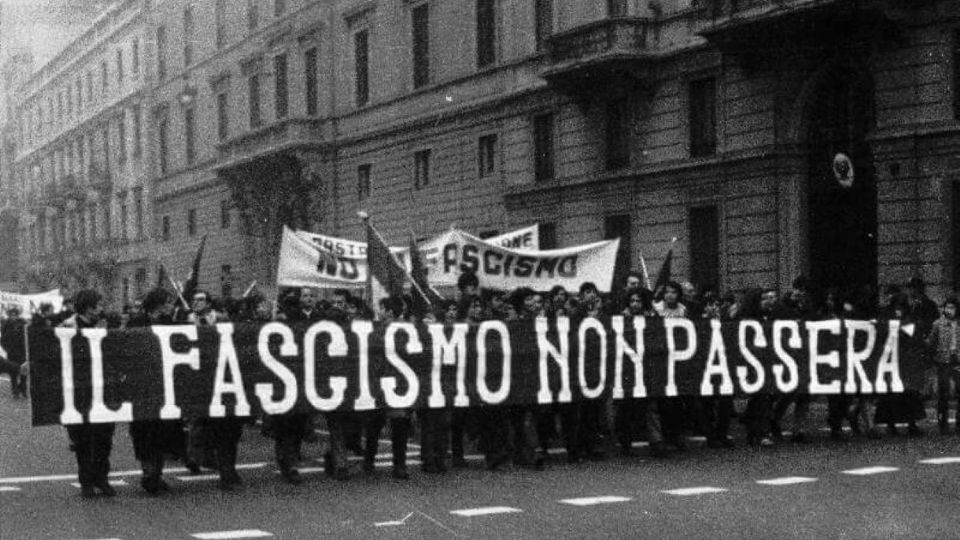
Deleuze & Guattari’s most revolutionary political claim is that fascism is not the opposite of liberatory desire but its nearest neighbor — a line of flight turned suicidal, the same destratifying impulse that elsewhere produced life, mobilized instead toward abolition. Microfascism is the name for this tendency at its most intimate source: not in the…
-
This essay compares four ways of answering the question that Husserl called Wissenschaftslehre: what grounds the objectivity of the formal sciences, and what is philosophy’s task with respect to them? I read Husserl through the tradition that Per Martin-Löf has made contemporary—the semantics of evidence, judgement, and meaning explanation; Jean Cavaillès through Brice Halimi’s reconstruction…

-
From 1957 to 1972, an eclectic constellation of European radical and avant-garde groups came together to form the Situationist International, which would produce, among many things, a technique of urban exploration known as psychogeography. As a reaction to the perceived sterility of 20th century urbanism, the Situationists encouraged the free, spontaneous wandering of the urban…

-
In the essay “Existence and Death,” Alain Badiou presents a critique of what he calls “ante-predicative” theories of death. These theories secretly elevate death into a constitutive power lying beneath or beyond determinate beings. Whether in the guise of Bergsonian life, Heideggerian finitude, Sartrean nothingness, or Deleuzian becoming, death ceases to be a simple limit…

-
The chosen title anticipates the movement: in 1982, Jacques Derrida delivered a lecture titled On a Newly Arisen Apocalyptic Tone in Philosophy, itself inspired by Kant’s 1796 essay On a Newly Arisen Superior Tone in Philosophy. In that lecture, Derrida picks a fight with the philosophy of his time, attacking the apocalyptic tone of endings…

-
Before learning about the philosophical grounding of John Cage’s 4’33 minutes of ‘silence’, i recalled my base, almost thoughtless, quasi-physiological, naïve, reactions. I asked myself: How far this game is allowed to proceed, and how many players are allowed at the table? To elaborate: What about full 2-3 hours “Concerts of Silence,” with each piece…

-
Desire has a mimetic component, as Girard reminds us, and above all, it is never disconnected from its cultural, social, and political context. This makes it, on the one hand, an experience that is also collective and, on the other, one that responds to the most individualistic principles[2] of human beings. Capitalism and political propaganda…