By Charles Wolfe
For Alain Badiou, drawing a direct contrast to Heidegger, the novelty of Greek philosophy lies in the Platonic subtraction of all sensible presence and empirical particularities to produce pure ideal quantitative units[1]. Platonism is a break with previous modes of ancient philosophy that worked in the register of quasi-religious poetics of aesthetic experience. Badiou notes the historical tendency to view this subtraction as a loss that must be corrected. This tension between the intelligible and sensible continues till the present. Contemporary philosophies (that I endorse) that view science as a “view from nowhere” create a gulf between this minimalist abstract scientific image and our manifest image of ourselves as agents with normative intentions situated in time and space.
The Platonist division between intelligible and sensible presents the mental challenge of conceiving of the simultaneous existence of our “common sense” categories of time, space, and causation and an atemporal, impersonal space that is the condition for all perception yet cannot itself be perceived. The ideal cannot be given a presence or location within space or time, but presence is somehow always already accounted for by the ideal. Encompassing a particular under a universal requires the compossibility of differing contingent (tychism) positions in time and space within an atemporal plastic continuity (synechism). Truth is indifferent to the local contingent position of its instantiation. The attempt to resolve this contradiction will have aesthetic and affective consequences of significant interest in illustrating the normative relationship between aesthetics and logic illustrated by C.S. Peirce.
The antidote to this potentially Gnostic subtraction of presence is the addition of something into the void left by the evacuation of presence. The Hegelian theory of beauty allows for the participation of the ideal in sensuous visible form, but only conceives of aesthetics as an immediate expression of the universal superseded by religion and finally philosophy. Peirce’s theory of diagrams as a type of sign called an icon allows for a picture-thinking that satisfies Hegel’s critique of Kantian picture-thinking governed by the subject-predicate logic of the understanding and offers a normative aesthetics of the social techne of images. Aesthetics as a theory of the presence of the intelligible in Hegel and Peirce allows for a theory of picture-thinking or iconicity that bridges the void between intelligible and sensible.
Diagrams are selective, modifiable reconstructions built up from a reduction or subtraction (aphairesis) that produces an empty and generic hypostatic abstraction generated through cutting, revising, removing, excluding, and accentuating. The ideal universal itself has no presence and can only subsume particulars through the intermediary of semiotic diagrams acting as the presence of manipulable ideal objects. There is no mirroring or correspondence between concept and object. Diagrams should be understood as generic models.
An icon which shares only some qualities with its object has so to speak a general side in so far as it is blank with respect to the aspects not partaking in the Icon; these are bracketed by [abstraction] in the Icon. Even if the very Icon in itself is not, as mentioned, general, one could say that any Hypoicon (Peirce’s notion for any sign which primarily functions by means of iconicity) thus involves a germ of generality. This becomes the possibility of various more or less strict stylizations of Icons, rendering certain qualities important, others not so, often exaggerating the qualities taken to be important, whereby the Icon acquires a certain degree of typicality, being able to subsume tokens under it.[2]
The importance of bracketing aspects of an object in arriving at a generality is a central theme of Husserl’s essay The Origin of Geometry[3], which seeks a universal foundation for geometry and, by extension, all sciences. Husserl is attempting to answer how, through the dissemination of geometry through history, disparate people spread through space and time could arrive at the same ideal objects and essences that could be subject to axiomatic experimentation and the creation of proofs. While not explicitly or consciously, Husserl is engaging with the problem of participation in trying to account for how an imperceptible universal ideal can be inferentially modified to produce an actually existing empirical entity and, more importantly, how an empirical entity can be reduced (subtraction) to a universal ideal. Husserl’s answer is that the receiving and handing down of intellectual tradition must presuppose an intuition of a universal ideal essence that, although “sedimented” with the contingencies and inessential particularities of differing languages and cultural practices, can be “reactivated” through reduction and intuition to carry out further inquiry into the essence. Prior to the basic analytic geometry of genus and species, there must be an act of Platonic craftsmanship or world-building.[4]
Derrida’s commentary on Husserl’s essay is presented as a triumph of humble quietism and Socratic irony over the dogmatic metaphysical excesses of Husserl’s phenomenology. If you’re at all familiar with deconstruction, you can anticipate the critique before even reading it. The “originary self-certainty” of the innate intuition seems custom-made as an instance of the transcendental signifier.
Although Derrida is right in insisting on slippage and rejecting the “historical a priori” (reactivating intuitive original self-evidence) of the ideal foundation, by rejecting a foundation for objective ideal objects, he also loses the rational kernel of Husserl’s theory of the cognition of pure species; we still must reconcile Derrida’s rejection of the historical a priori as a transcendental signifier and Husserl’s distinction between intentionality and what he would sometimes call ideational or generalizing abstraction. Husserl’s reduction (ruckfrage), removing contingencies and particularities until we are left with a universal essence, allows us to map the process of generating an abstract generalization that can be modified to correspond to an empirical particular or vice versa.
In volume six of Husserl’s Logical Investigations, this methodological reduction is codified as categorial intuition. Categorial intuition (much like Peirce’s diagram) is a development of Kant’s concept of the schemata into a general account of cognizing ideal universal objects called pure concepts or categories. In the Critique of Pure Reason, the schemata are what glue together sensible intuitions and the categories, or the meta-language that allows us to make empirical judgments. Schemata are mental images or pictures that allow us to recognize a drawing of a triangle on a piece of paper or in a logo for a company, as all participating in the same transcendental ideal of triangularity. The notion of categorial intuition suffers from the flaw of all a priori transcendental philosophies. The transcendental is generated by arbitrarily tracing over empirical objects and hypostatizing the conditions for these abstractions and their corresponding mutually presupposed empirical objects into a foundational given or metaphysical apriori form.
Wanting to avoid this hypostatization, Derrida objects to Husserl’s distinction between reactivation and dissemination. For Derrida, reactivation assumes a continuous universal ideal that can be accessed distinct from the “sedimented” contingencies and particularities accumulated in the dissemination of a sign. A sign is a slippage of references in relation to each other or a differing and deferring whose sense is purely contingent, aleatory, and polysemic. Husserl’s intuitive self-certainty is what Derrida calls a transcendental signifier, or a foundation acting as a guarantor of sense outside the slippage of language.
Peirce’s diagrams give us a way to account for cognizing categories or generic (a subject without predicate) ideals as a kind of sign, or inferential picture-thinking, and therefore not reifying this capacity into a given or foundation (transcendental signifier), and concomitantly allow us to accept groundlessness without the Derridean skepticism of contingency without continuity. Hegel objected to what he called “picture-thinking” in the Kantian understanding and argued for a decentering of the understanding in the tripartite structure of syllogisms, or what Robert Brandom calls modal realism[5], in which universals govern not just empirical particularities but all possible worlds. Peirce’s diagrams give us a way to think in an evolved picture-thinking through aesthetics.
Peirce once remarked that if Kant had understood the importance of the schemata, it would have consumed his whole project. The schema appears in the Critique of Pure Reason in the context of attempting to bridge together the sensible and the intelligible, or innate sensible intuitions and normative meta-linguistic categories. For Kant, reason and intelligibility are limited to making judgments about empirical objects. There is a final complete table of empirical judgments and categories, the meta-language of rules to use judgments, and therefore a universal final series of true statements, analytic, true by definition apriori, and synthetic, true by fact. The schemata are rules that allow for a general image to be imagined that connects the normative rule-governed behavior entailed in judgments and categories and our sensible intuitions occurring in aesthetic space and time.
The schema is a type and hence no mere association of particular ideas […], but it is on the other hand a result of construction and is thus no pregiven essence ready to be picked up. Eco runs through the Kantian doctrine of the reflective judgment in [the first critique] in order to underline the schema’s constructed character: the reflective judgment seeks to constitute a general concept to subsume a particular phenomenon […], and in so doing, it conceives of the thing as if it was a part of something general. In order to do so, furthermore, it conceives of the thing as if it was teleologically organized. In any case, this teleological and generalizing feature of reflective judgment commits it to proceed by trial-and-error – that is, in a construction of a schema which will be able to subsume the phenomenon in question. Insofar, the schema becomes the general type which permits the recognition of tokens of it.[6]
There are three schemas: empirical, mathematical, and, most important for our interests, pure concepts or categories. The corresponding schemata belonging to categories, transcendental schemata, being non-empirical universal generalizations for all objects, cannot generate images and remain at the level of rules. Kant’s attempt to bridge the divide between presence and sense is distinct from the objective idealist conception of sense as constitutive of presence. The Kantian transcendental aesthetic consigns time and space to pure intuitions of consciousness, which, unlike sensible intuitions, generate their object completely a priori, independently of any external stimulus. Time and space are not objects of experience but the conditions of their appearance. The Kantian subject is the attempt to defend the interiority of a Cartesian cogito or Leibniz’s monad after Hume had rendered the substance metaphysics upon which they were built unthinkable. Kant distinguishes between the external sense of empirical objects (quantity, quality, cause and effect, etc.) and the inner sense of thoughts and internal states; time and space belong to the private, windowless interior of the Kantian subject and have no bearing on things in themselves. The empirical and mathematical schemata are drawn within this “monadic” aesthetic presence or inner sense.
As we saw previously with Husserl and geometry, the schemata are crucial for practical instances of inferences occurring not just in empirical judgments but also in scientific research encompassing abstractions and observations utilized in making and testing theories and theoretical objects. The universal ideal objects of geometry constitute a kind of mathematical category. The thought experiments and reductions carried out throughout Husserl’s work and codified in categorial intuition remain within the self-contained Kantian monad’s private inner world; hence, the danger of the ideal being covered over by sedimentation in public intersubjective dissemination. For Husserlian phenomenology, the condition for all objects of knowledge lies in intuition, and thus, contra Kant, it is necessary that categories be intuitable.
Husserl gives the example of someone being able to recognize Goethe’s (or anyone else’s) handwriting.[7] Just as Kant wants to give an account of the conditions for possible experience and knowledge, Husserl wants to account for the conditions for cognizing a non-empirical universal or category in what he calls a categorial intuition as a means of making a judgment as to the author of a piece of handwriting. The categorical ideal universal governing all possible instances of Goethe’s handwriting cannot be an association of particulars (how could anyone experience all possible instances of someone’s handwriting?) and can only subsume a particular through the images generated by a transcendental schemata that Kant had previously foreclosed. Husserl departs from Kant again insofar as a category or pure concept devoted to all possible instances of something like a specific individual’s handwriting lies outside the Kantian categories governing empirical judgments. Kantian categories are a priori universal normative rules for talking about empirical objects, whereas for Husserl, categories are ideal universal objects generated in intuition. For Husserl, any universal idea needs to be treated as a category and therefore has a categorial intuition, making it possible.
In the Husserlian reduction, the variations, subtraction, and modifications carried out to arrive at the essence are the intuitive labor producing the category or pure concept. The identification of handwriting, the “reactivation” of Euclidean geometry, etc., are all made possible by an originary intuition or picturing that renders a universal ideal thinkable and identifiable. This is the difference between identifying an empirical particular as a chair and making a chair from scratch and needing to sketch, or in this case, intuit, a blueprint because the categorial or universal ideal chair is not visible. As long as we remain at the level of empirical judgments, the empirical schema will suffice, but Husserl’s thought experiments require venturing into the categories and transcendental schema.

Pierce’s notion of the diagram approaches schemata and the problem of cognizing universals in a generalization through the lens of his semiotics. For Peirce, there are three kinds of signs: icons, indices, and symbols; in using inferences, we recursively cycle through the three signs over and over again. Unlike Kant and the positivists, much like Hegel, knowledge is not a fixed final set of true statements tethered to a foundation but a groundless process of inquiry. Symbols make up the medium for deductive inference and the normative basis for the inductive function of indexes in empirical verification. Icons, being the most versatile of the three, constitute what Pierce calls abduction or abductive inference; abduction is essentially a way of forming and revising theories and normative commitments premised on previous uses of theories, inferences, and observations.
Icons, such as the flag of a nation or the logo of a company, are not taken to be stand-ins for or pictures of the entity they belong to (although things like flags or logos can function this way as an index). Instead, the icon has the freedom from its object to embody some real or imagined selected quality or aspect attributed to it. Interpreting an icon lies in asking why a choice was made in selecting or excluding something and its intended effect. Icons are essential for forming theories, as they allow for connecting inferences and previous theories in a holistic abstract model that is constructed rather than given and freely modified and reworked as our assumptions are proven or falsified. Icons allow us to aesthetically organize information and subtract unwanted noise and stimulus.
Diagrams correspond to what Pierce calls the “operational criterion for iconicity: one phenomenon is an icon for another if and only if experiments or manipulations on the former may reveal new insight into the latter (“new” in the sense that the information in question is not explicitly expressed in the icon). This implies that diagrams are the vehicles for all deductive reasoning – such reasoning simply being defined as manipulations on diagrams.”[8] A diagram is a type of icon that oscillates between iconicity and being a symbol or vehicle for deductive inference. The thought experiments and reductions theorized and carried out by Husserl attest to the symbolic dimension of diagrams and the abductive labor they perform. Diagrams, as non-empirical pure concepts true for all possible worlds, need not be representations of empirical particulars, what Peirce calls an applied diagram; pure diagrams are true representations without acting as an index for an empirical actuality.
The diagram pulls generalization from the intuitive private aesthetic interior (inner sense) of the Kantian monad to the socio-historical public aesthetic space/time of the dissemination and circulation of signs. Making and using maps is the simplest expression of the impersonal collective nature of the diagram. Diagrams are social noetic technology encompassing technical knowledge, practical techniques, and plastic technical objects. Language for Hegel and Pierce is not a passive medium for communication but the techne of reason as socially embedded normativity. Reason as an experimental social technology frees us from the image of reason as canonical language for talking about sense experience in Kant and Husserl’s transcendental philosophy. Viewing language holistically as a space of reasons means we can no longer isolate empirical and mathematical schemata from transcendental schemata. All of language has a syllogistic or modal concrete universality in contrast to the abstract universal (form absent of content) subject-predicate logic of the understanding. Brandom’s modal realism, contra his teacher David Lewis, is not a realism about the ontological status of all possible worlds but the ontological validity of modal facts for all possible worlds.
Hegel’s rejection of picture-thinking lies in its abstract universality. The Kantian understanding, or picturing, deals with the predicates belonging to a singular or plural subject, “this X is Y” or “these X’s are Y”, rather than the concrete modal universal of all X’s. As I mentioned earlier, Kantian transcendental philosophy arbitrarily abstracts empirical descriptive language from the concrete modal whole that makes it possible and reifies it into a self-contained necessary universal ground or foundation.
Fredric Jameson notes in an essay devoted to Hegel’s concept of picture-thinking that by being sublated into a modal concrete model of thought and language, it isn’t abolished once and for all but redeployed allegorically.[9] For Hegel, much like art, religion assumes the mantle of the universal in an abstract, inadequate way that only philosophy can fulfill. Religion attempts to stage an allegorical relationship between a “symbol”[10] and the universal that culminates in the impossibility of the identification of the universal and a symbol or picture.
Beyond its allegorical religious function, Jameson notes the presence of a variation of picture-thinking in science fiction, Einstein’s temporal thought experiments, and structuralism and post-structuralism, among others, that carry it beyond the Kantian model Hegel had rejected.
Kant distinguished between two kinds of non-conceptual language: the symbol and the schema. Traditional literature cleaved to the symbol and its ‘picture-thinking’ (thereby allowing Hegel to pronounce its supercession by philosophy as such, in his theory of the ‘end of art’). But science fiction had the schema; and it is what we have been calling literality, the use of visual materials not to represent the world but to represent our thoughts about the world. […] This is a kind of ‘picture-thinking’ very different from what Hegel understood as Vorstellung; nor does it fall under the anathema of representation since it does not represent.[11]
Jameson’s description of literality perfectly fits the development of schemata in post-Kantian thought in Husserl and Peirce we have been following, even down to the collusion between schema and aesthetics. Peirce’s diagrams give us a way to conceive of a modal picture-thinking consistent with Hegel’s critique of Kantian representation. Generic images allow us to think about non-empirical pure concepts or categories and to represent our thoughts about these entities. Circling a destination on a map or drawing a line from your point of departure to this point is not a representation of an object but an aesthetic representation coordinating your thoughts, coming to a conclusion or end (logic), and illustrating what must be done to achieve this end (ethics). Contemporary digital maps can be updated in real time in response to traffic, accidents, weather, etc., and allow for a collective readjustment of means and ends through the intermediary of public images. Jameson’s literality attests to the symbolic pole of the diagram’s oscillation between generic icon and symbolic vehicle for inference.
Hegel’s thoughts on aesthetics and his broader theory of art are part of his philosophical system in which art and religion inadequately and incompletely express the universal, and only philosophy itself can grasp the concrete universal as a concept rather than in abstract aesthetic sensuousness and religious imagery. Hegel’s distinction between art as abstract immediacy, religion as mediation, and philosophy as concrete immediate mediation in and for itself is isomorphic with Peirce’s trinity of aesthetics and icons, ethics and indexes, and logic and symbols.
Hegel distinguishes between three periods in art. Only the second, Greek and Renaissance classicism, achieves the sensuous visibility of ideal forms. “Sensuousness does not reside in the internalization of the world by a subject; or vice versa, in an overall mechanical immersion of a subject in the object, the thing. It resides instead in the specific contact with the event, with the objectivity of the world…”[12] Chukhrov characterizes the spatial and temporal appearance of the ideal in beauty as katabasis, a term originating in the Greek myth of the descent of Orpheus into the underworld. In Christianity, katabasis is associated with the eschatology of Christ’s death and the descent of God into human history and the promise of redemption.
Hegelian beauty sees the participation of the ideal in sensuousness as the presence and light of God in the underworld of the Gnostics; sensuousness is the katabasis of the idea. What Chukhrov characterizes as the “specific contact with the objectivity of the world” is the embodiment and alienation of the universal ideal in an individual sensuous object. As we saw previously, the intelligible is something that can never be encountered in time or space. The universal form of something, by virtue of what it is, can never be an individual object of experience. Just as God must be transmuted into Christ to bridge the separation between man and God, the ideal universal must be transformed into an individual beautiful object to participate in the world of sensible particulars.
The presence of the intelligible in beauty is unstable and is undone by the third period of art, Romanticism. Philosophy, for Hegel, can succeed where art fails insofar as philosophy renders explicit what is implicit in self-consciousness as concept, representing a more concrete realization of self-consciousness. Philosophy assumes no givens or foundations and creates its own objects and thus is the greatest embodiment of universal freedom. Beauty’s supersession by romanticism and art’s supersession by philosophy have the consequence of subtracting the intelligible from sensuous presence and reopening the gap between universal and particular. For Jean-Luc Nancy, Hegel characterizes the end of art and the primacy of philosophy as a world devoid of color. “Hegel himself says—that philosophy comes along when a form of life is drawing to a close—but what’s interesting is that Hegel says that philosophy then paints its gray on gray, so ultimately this whole affair is quite sad. It’s sad for Hegel because, as he says elsewhere in the Aesthetics, our (i.e., his) time is bereft of the colors of life.”[13]
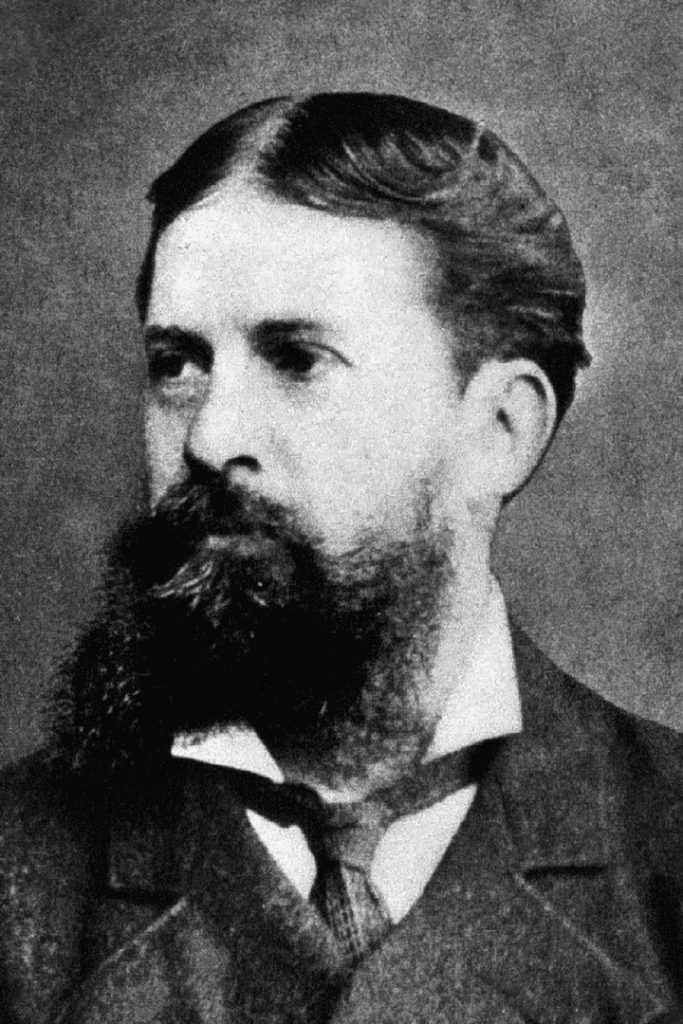
Peirce’s conception of aesthetic immediacy as the use of iconic signs allows for the sensuous visibility of the ideal to become an integral part of language rather than solely the purview of classical art. In Peirce’s tripartite scheme, what he calls normative sciences, aesthetics sets the normative basis for ethics and logic in a general image of the ends that ought to orient ethical action and logical forms of reasoning towards a more concrete realized rationality.
The normative way in which we ought to do things and come to conclusions concerns aesthetics insofar as ethics and logic participate in the continuum as a sensuous, visible presence in time and space that ought to be integrated and navigated a certain way. Ethics and logic are given their ends in the aesthetic images in which they are deployed. Deciding how to act, what to do, and how to reach a practical end or theoretical conclusion are inferences made in a public generalized abstraction (diagram or image) that allows for a series of scenarios to be worked through to their ends before the fact of choosing which should be chosen. Peirce’s normative science is an aesthetic of cognition.
This should not be understood as a romantic, irrational return to poetic presence that Badiou critiqued in Heidegger. Reason intervenes in its own development in recursively setting and, in light of the consequences, revising its own ends. For Peirce, aesthetics is the site of the collective orientation of ends in the mediated presence of spatiotemporal images. The objective idealism of Hegel and Pierce conceives of normative self-consciousness as synonymous with the mediation of language and is incompatible with the fetish for immediacy, immanence, and pure presence attested to in philosophies of consciousness, affect, the body, etc., that extend well beyond phenomenology.
Hegel’s katabasis of the idea allows for the atemporal view from nowhere to participate in the aesthetic space-time of presence by rupturing its immanence. Hegel and Peirce avoid the phenomenological dualism of immediate consciousness of presence and mediated self-consciousness. As Hegel argues in the Phenomenology of Spirit, upon reflection, “immediate” sense-certainty and perception are always already mediated by language with modal consequences, meaning that presence is constituted in the alienation between subject and object.
With the end of art, presence of course remains mediated concrete self-consciousness, but as Nancy notes, the disappearance of sensuousness leaves behind a grey world absent of the aesthetic presence of the idea. The ideal always already constitutes the structure of presence, but without Peirce’s diagrams, universal ideals are absent from the aesthetic presence of social space and time in which doing and reasoning actually take place.
[1] See Being and Event by Alain Badiou. Part three Meditation eleven
[2] Diagrammatology – Frederik Stjernfelt, Pg. 106.
[3] Edmund Husserl’s “Origin of Geometry”: An Introduction By Jacques Derrida (1962)
[4] “The framework in which the Euclidean oscillations between particulars and universals is expressed is what Plato calls craftsmanship or world-building which is an enterprise undertaken by the mind using logoi. The mindcraft draws as its raw material physical becoming which is only endowed with forms of elemental powers and no higher forms. The process of the craft itself proceeds by way of patterns. A pattern is not, however, a thing, but that by which a thing is structured, made or designed. Moreover, patterns are not discrete. For at each level in the hierarchy of particularities and universalities (e.g., these straight segements-cum-acute angles, this triangle, this particular kind-of-triangle and triangularity as such), there are such uniformities as patterns mainly by virtue of how—rather than merely what—things hang together—that is, the question of structure as the designation of Being.” Reza Negarestani – Euclid’s Elements part 1. https://toyphilosophy.com/2018/03/21/euclids-elements-a-philosophical-thriller-part-1/
[5] See Brandom’s From Empiricism to Expressivism, chapter five.
[6] Diagrammatology – Frederick Stjernfelt, Pg. 97.
[7] Ibid., pg. 194.
[8] Ibid. Pg. 200.
[9] Hegel and Picture-Thinking, or, an Episode in the History of Allegory – Fredric Jameson.
[10] Hegel’s usage of the term symbol does not correspond to that of Peirce.
[11] In Hyperspace – Fredric Jameson. London review of Books, Vol. 37 No. 17 · 10 September 2015 (https://www.lrb.co.uk/the-paper/v37/n17/fredric-jameson/in-hyperspace)
[12] Practicing the Good: Desire and Boredom in Soviet Socialism – Keti Chukhrov, pg. 219.
[13] German Philosophy: A Dialogue – Alain Badiou and Jean-Luc Nancy, Pg. 33.


Leave a Reply