By chiiii
Situating the Subject With God
How is the subject situated in the world? This issue has been contended throughout history.
For the Neoplatonists, no such issue existed. The subject was only the outward presentation of a deeper noncorrelate point of reference. The One, being the nucleus toward which every thing contracts, preserving its circumscription against the aggregate of being itself, is also that in which the subject finds respite from its own contingency—or thrownness, to use Heidegger’s term—for its gravitational pull holds the subject fast wherever they are.
Even Edward P. Butler’s polycentric interpretation of Neoplatonism preserves this intuition. The depth to which the subject is pulled is no longer an abstract unity dimly participated in, but a relational peculiarity. This relativity speaks more readily to psychoanalysis, except that there is no Other properly speaking, since the One—or, more properly for Butler, the Ones—are not oppositional but panta en pasin: all things in each thing, uniquely.
The most radical proposition of modernity is perhaps that the subject is situated through semiosis.
For the rationalist tradition, the will-to-reason preexists reason’s capacity to follow it; reason must find its path. For Descartes, it does so from the position of the subject, who represents less an empirical experiencer than an ideal signifier.
The cogito situates the subject being that signifier from which it explicates its own limitations—where it finds whether it is delirious, and what it is. This notion of limitation is essential because it introduces the first foreign agency that situates the subject.
For Descartes, alongside the cogito, God situates the subject. While the will-to-reason enjoys its fulfillment, the gap between reason and empirical reality remains. This is resolved not by way of the idea of the self, but through the non-ideal—and yet neither merely empirical—being of God. Because His transcendent virtue excludes deception, reason accurately represents reality when used correctly.
Insofar as the idea of the subject has already been determined, a non-homogeneity emerges between the subject and God that is novel in the history of philosophy. Whereas previously the subject was situated as an appearance of God, it is now explicitly the non-God; with respect to God, we can speak only through hyperbole. From this derives the distance between the master-signifier and the Real.
As we have seen thus far, an understanding of the situation of the subject and theology have always been, to some extent, intertwined theoretical endeavors.
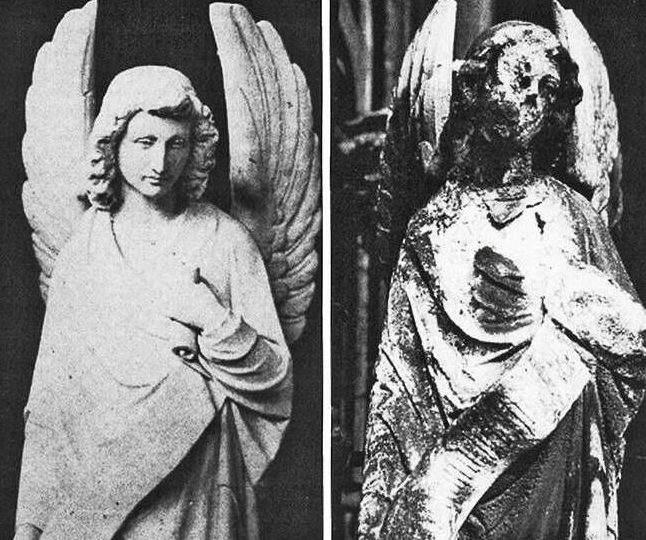
Lacan even refers to this negatively, saying “the true formula of atheism is not God is dead […] the true formula of atheism is God is unconscious.”[1]
After Deleuze’s critique of psychoanalysis and the classical image of thought more broadly, though, how are we to understand the relation between the situation of the subject and theology? This question has hardly been given due attention, but a few tentative steps can be taken by drawing on concepts from disparate sources and extending them through careful inference.
Psychoanalytic Triadology
Deleuze’s triad of desire, intensity, and difference marks a monumental event in the history of the God–world relation. Namely, that the first moment of ontogenesis becomes the passage of immanence into its own self-alienation. If we are to think substance as subject—a move foreign to Deleuze himself, yet one rendered possible by the German Idealist trajectory of post-Deleuzian thinkers such as Iain Hamilton Grant—the productivity of desire and its expression of the imperceptible become alike to what Christian theology understands as the affective self-imaging of God, wherein “the Son is the image of the invisible God, the firstborn over all creation.”[2]
This is also similar to the procession from the Real to the Imaginary in Lacan, except that the Imaginary no longer emerges from the encounter with the extrinsic mirror, but from the desiring of the Real producing the master-signifier-Logos.
If we now have the Father and the Son as the self-positing of being, or the Real, as subject, where might the Spirit appear if we are to complete this synthetic analogy with Christian theology? Schelling, to whom my present reading is deeply indebted, conceived the Spirit as the unity of the Father and the Son, in line with historical Christian theology.
Yet, given our understanding of these hypostases thus far, this unity cannot be abstract, as classical theology would have it, lest the particularity definitive of the Son as the image of the Father’s imperceptible life be negated. Rather, the Spirit must be a concrete unity.
This means that our relation to the Spirit can no longer be dogmatic or abstract, but must instead be either narrativized or conceptualized within the context of particular philosophical problems or theological settings. The Spirit functions as a center: a principle around which thought is organized, giving orientation to the triune God’s processions beyond mere opposition.
Derrida critiqued the notion of the center for excluding itself from the totality it purports to organize.
“The center is at the center of the totality, and yet, since the center does not belong to the totality (is not part of the totality), the totality has its center elsewhere.”[3]
Yet, given this Triadological orientation, far from the Islamic monadological orientation, the Spirit as center evades this objection by remaining immanent to the constitution of the totality itself.
As concerns a more specifically creaturely psychology, this Triadological paradigm resolves a multitude of problems in contemporary philosophical psychology.
For example, the post-Nietzschean critique of Lacanian negativity falls short here, despite the clear Lacanian heritage of this theory, because the subject is not suspended between desire and its impossible object, which would amount to a Pneumatological heresy denying the consubstantiality of the Spirit with the Father and Son. Rather, the subject as such is enabled only through its contingent orientation provided by the Spirit.
It follows, then, that jouissance is no longer understood as transgression, but as joyful affirmation of the subject’s Pneumatological orientation in cognition or social narrative play.
This theory also withstands contemporary theological critique, for example: rather than being theologically dogmatic, if understood within a non-monotonic logic, this theory of the Trinity is by its own terms subject to dynamic reconceptualization. The Spirit, understood more as a parameter than an image of thought, becomes the patron of constructive theology, being the locus in which new problems confronting the Church are introduced as cognitive orientations and subsequently are addressed through a distinctly Trinitarian methodology.
The paradigm developed here provides a foundation for future psychoanalytic and theological work within a post-Deleuzian framework. Work which is not enclosed within the religious domain, but which takes the secular as the medium through which theology continually becomes.
[1] Jacques Lacan, The Four Fundamental Concepts of Psycho-Analysis, ed. Jacques-Alain Miller, trans. A. Sheridan, Harmondsworth, Penguin, 1979, p. 59.
[2] Colossians 1:15 NIV
[3] “Structure, sign, and play in the discourse of the Human Sciences.” Writing and Difference, 18 May 2001, pp. 375–394, https://doi.org/10.4324/9780203991787-14.
 Hyperspekulation
Leave a comment