By Édgar A. Valenzuela
1. Introduction
What do I mean when I state that “set theory is hyperstitional”?
Following Gödel’s famous results, any theory capable of carrying the most basic of maths, Arithmetic, is deemed to be either inconsistent or incomplete. At the very beginning, this position set the math world on fire because it shattered the Hilbertian dream of a logical grounding of mathematics. One of the problems was that, at the time, inconsistency meant absurdity: ex falso quodlibet. This position changed over time with the introduction of paraconsistent logics and dialetheism. So, from the outset, there are two possibilities: inconsistency or incompleteness. For decades, the choice has only been incompleteness. And even though this position meant a foundational earthquake at the time, it now stands as a fruitful research topic. Nowadays, et theoreticians devote their research to shedding light on the possibility of independent statements and their consequences: Combinatorial principles, large cardinals, forcing axioms, constructible universes, and inner models.
My claim is that this constitutes a hyperstitional move, but we need to argue for it. Our core argument revolves around Gödel’s Incompleteness Theorem, and given that Alain Badiou was a philosopher of the event using a heavily mathematical artillery, we shall tackle Badiou’s metaontology. We will do so, mainly, according to the first volume of Being and Event. My biggest claims are that Badiou’s event is intimately related to hyperstition, and that, even if he is always recoiling from the philosophy of maths, he is engaging with the philosophy of mathematics. Even if Alain Badiou elicited the space to tackle these ideas, the nervus probandi lies beyond a faithful reading of his philosophy.
Then we move to a section devoted to the first possibility that Gödel’s Theorem elicits: Incompleteness. We will see that incompleteness already institutes a mathematical plurality. Afterward, we move to the second possibility, that of inconsistency. These two topics shall pave the road for our main claim, that set theory is hyperstitional. This project broadens Nick Land’s ocean1 wherein ”qabbalism swims, because it was not mathematical, but popular numerical culture.”Expanding hyperstition to the philosophy of mathematics will “advance beyond the natural numbers […] [to] the set-theoretical post-numerical spaces”2. This will seize and build upon the tide that Badiou has left in the Immanence of Truths by returning to the set-theoretical post-numerical spaces.
1 Qabbala 101 in N. Land, Fanged Noumena, Writings 1987-2007, Urbanomic and Sequence Press, Twelfth edition 2024, page 591.
2 Ibid., Popular Numerics, p. 593.
2. The Badiouan Wager
The extent of Badiou’s influence because of his bet on category theory in his second Being and Event is yet to be determined. Certainly, twenty years after the apparition of Logic of Worlds, we see an explosion of category theory in many unexpected areas like art, philosophy, and the humanities. But now, Badiou has come back to set theory in the Immanence of Truth, the third issue of Being and Event. This piece is to be read as seizing this comeback to reread the first Being and Event.
I will be transparent before contextualizing my argument: Badiou is not enough. The problem with his program was not his metaontological claim, ontology is mathematics, but a lack of radicalism. He set up a scenario in which the Subject is instituted as an active quasi-macho wanna-be hero who has to adhere to a fidelity to bring about the event. This does not make an immanent enough event: the event is always there. We need a passive event, an event of surrender3. So neither Deleuze nor Badiou, but also both Badiou and Deleuze.4
Even if I were to entertain the metaontological thesis, ontology is mathematics, in its most general apparition, my argument, however, shall be in the context of philosophy of mathematics. So, this equation should be read more precisely as:
Mathematical ontology = set theory.
As far-fetched as the metaontological claim might be, it is soundly grounded in a philosophical claim: the One is not. Starting from the Parmenidean ontological earthquake, Badiou concludes the ontological inconsistency of the One. Since the One is not, there has to be something rather than nothing, and it is precisely ‘nothing’ that exists. I.e., he conjures the axiom of existence that states the existence of an empty set, a nothing ∅. But this nothing that is something has to be accounted for, hence Badiou advocates an ontology of the multiplicity. Not only nothing is, but this nothing is but one instance of a multiplicity.
Now, even if the Frenchman constantly rejects his philosophy as a philosophy of mathematics, or being involved in it, he cannot stop conferring philosophical theses upon his metaontological claim. One quick instance is the ontological role he assigns to set theory, whilst in the Logic of the Worlds, he assigns a phenomenological role to category theory, precisely through topoi.
The Badiouan project of equating ontology and mathematics, specifically Zermelo-Fraenkel set theory, did a fidelity move: choosing incompleteness. Remember that the Incompleteness Theorem states a disjunction: inconsistency or incompleteness. That means choosing ZFC set theory to ground ontology, and doing it by first choosing incompleteness. Since ZFC set theory deals with multiplicity (the Cantorian Menge), it is able to address an ontology of the multiple rather than an ontology of the One. Very well then monsieur Badiou, but how are we to account for undecidable statements?
Badiou answers this with the method of forcing although, as we have already noted, this is not the only method. The forcing method is to be equated with Truth in the Badiouan architecture. This initiates a reading of the incompleteness as a fidelity from the Moroccan-born philosopher. Being faithful means staying attached to an undecidable statement: We have to get ourselves a favorite axiom and fall in love with it. In Badiou’s own words, fidelity is “[the] set of procedures by which we discern, in a situation, those multiples whose existence depends upon the introduction into circulation of an evental multiple.”5
Evental for the Frenchman means either something to be forced into existence, or a self-containing set: a ∈ a. Setting aside the conflation of self-membership and forcing –forcing being a method far larger than one used to obtain self-containing sets– the problem is that we do not need to engage in a Truth process to yield the undecidable; undecidable statements are always already there: pure immanence. Moreover, forcing is not only Cohen’s forcing, but we may also collapse through forcing. And forcing is not the only relative-consistency method: set-theoretic geology unearths forcing, and inner model theory builds models, either by extending the set-theoretic language or through extensions of first-order logic. Setting the tone aside for a second, this critique is but an admiration letter. The originality of his statements and their boldness cannot be overemphasized; I am here writing this because he decided to be faithful.
Undecidable statements are there to be conjured at any time by anybody. Hence the hyperstition. Better, undecidable statements can be synthesized at any given moment.
3 Gruppo di Nun, Revolutionary Demonology, Urbanomic 2022.
4 Mehdi Belhaj Kacem, L’être événement de Deleuze, Nessie, Fabien Tarby (dir.), n°5, 2010.
5 Alain Badiou, L’être et l’événement. Seuil.
3. Incompleteness
Whilst the alarmist version of Gödel’s Theorems, up to date, is still read as an inflated cry for an “imperfect” or “faulty” mathematics, the research around set theory has grown rapidly since the invention of forcing and the theory of inner models. Even if one of the biggest names in the community, Hugh Woodin, strives for a different account of foundations, wherein we must prove the veracity of statements rather than their independence, ‘because that is not doing math,’ the set-theoretic practice lies on a plural account of mathematics. A set theory researcher obtains either statements from (a variation of) ZFC or ZFC-independent theorems.
Even if, for the Badiouan project, ill-foundedness, i.e., the event: a ∈ a, meant inconsistency with his metaontology, ill-founded models are inevitable. On the one hand, Badiou relates the event to a paradoxical compatibility with his metaontological project, but going back to Gödel’s disjunction—incompleteness or inconsistency—we have seen that inconsistency is a completely viable project. On the other hand, if ZFC is consistent, i.e., we synthesize incompleteness, then there are ill-founded models.
Also, to an uneducated eye, self-reference is tantamount to paradox, which is something certainly far from being the case. A quality of the event that Badiou managed to capture beautifully is that it has to be summoned, it has to be named for it to exist, and as soon as we summon it, it is there: that’s why Badiou relates the event to a self-containing element a ∈ a. Also, as he very well positions Cantor as an event—and hence the set-theoretic project—because ZFC has to assume its own consistency to be consistent in richer contexts, by vanishing the event from its ontological program, he is foregoing a completely valid metaontology: self-reference and no contradiction to be found.
The lesson here is that, in practice, Gödel’s Theorem means a plasticity of the theory; the theory is forever ready to be synthesized. Amongst the many things to rescue from the Badiouan project, there is something in fidelity. Synthesizing an event is not without consequences to be faced. Once we have conjured an event, harnessing it is not something trivial. But, instead of faith-fully chasing the never-quite-there event, we are to synthetically doubt it. Even better, we are to unbelieve the event: Unbelieving the Axioms.9 For being an advocate of classical logic—later of intuitionism, but never outside of these—Badiou never saw that an argument by contradiction consists in suspending the veracity of a statement φ by positing its negation ¬φ.
9 Penelope Maddy, Believing the Axioms I, The Journal of Symbolic Logic, Volume 53, Number 2, June 1988. Also, Penelope Maddy, Believing the Axioms II, The Journal of Symbolic Logic, Volume 53, Number 3, June 1988.
4. Inconsistency
We have dealt with just one possibility: incompleteness. Now, until recently, the inconsistency was not acknowledged as a feasible project. With the development of non-classical logics, paraconsistency came about. In classical logic, we deduce anything from a contradiction: φ ∧ ¬φ ⊢ ψ. Hence, classical logic is said to be explosive. That is why it was thought that a contradiction was an invalid judgment. But a paraconsistent logic allows us to obtain paradoxes, and we simply say that, instead of having reached a contradiction, we have proved a paradox.
Hence, paraconsistency enables many things; amongst those things, it enables another way of thinking about the hyperstitional core of Gödel’s Theorems: we may bring about a paraconsistent math or synthesize a paracomplete math. Notice that this need not be an exclusive disjunction; it is not one or the other. In light of the logical research of the past fifty years, choosing a paracomplete and paraconsistent math is a perfectly viable option.
Paraconsistency institutes a genuine thinking of paradoxes. Even though most mathematicians recede before this position, they seem to lose sight of the fact that a contradiction does not nullify the fact. That means, if a mathematician is striving to infer φ, and somehow their arguments yield φ ∧ ¬φ, they consider it a failure. But it is because they cannot see that they actually deduced φ, whilst also deducing ¬φ. As Zach Weber has shown, paraconsistency gives a successful account of self-referent phenomena that generate paradoxes. Thus, even if self-reference is not an explosive scenario in general, there is a possibility for an unleashed self-reference. This possibility, an event in itself, enables the event: a ∈ a.
Building upon the Badiouan wager, Badiou failed to see that the Parmenidean conclusion is not only that the One is not, but also that the One is! Hence, paraconsistency is not inconsistent with the metaontological project. Paraconsistency, actually, extends Badiou’s metaontological claim. This entails that multiplicity is, whilst not being: the much-needed defense Badiou needed for his metaontological formula. Hence, the (general) metaontological claim rises while also crumbling: mathematics is (not) ontology and ontology is (not) mathematics.16 Either as a self-reference phenomenon, or starting from the claim that the One is not, the Badiouan project may stand while tumbling down in a paraconsistent ambiance.
* Zach Weber, Paradoxes and Inconsistent Mathematics, Cambridge University Press, 2021.
16 I am indebted to Andrey for this insight. See, J. A. Bonilla, “El ser paradójico del acontecimiento: la inconsistencia de la consistencia en Alain Badiou”. To appear.
5. Hyperstition
What these two previous sections clarify is that the Gödelian dichotomy between incompleteness and paraconsistency actually places logic at the very center of mathematics. The Hilbertian program was shattered not because logic has nothing to say about math—as the Incompleteness Theorem allegedly proved—but because it only considered classical logic. But that consideration was virtual, at least in mathematical practice. The forcing method actually establishes an intuitionistic logic: we are already using non-classical arguments. To rekindle Hilbert’s program, we only need to become pluralists. How are we to achieve this?
Thus far, hyperstition has barely made an explicit apparition; we are yet to synthesize it.
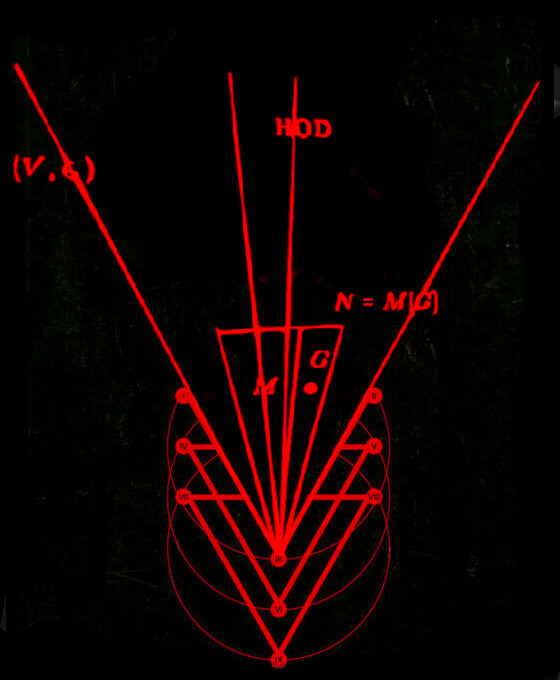
The two ways paved by Gödel’s Theorem show the same thing: we cannot pinpoint what a set is. The fact that there is no definition of a set is something every mathematician is told at some point. But the undefinability of a set, which lies in the plurality that the incompleteness yields, is not something often heard of. We come to know a set by its relations to other sets, and these relations are determined by the axioms we lay down, but such axioms can be changed. The very practice of a set theorist lies in its awareness of this fact; this fact elicits questions about the nature of sets and the set-theoretic universe, questions that bring forth research. So the set is synthesized.
In Communiqué Two, (digital) hyperstition is heavily related to numbers, maps, codes, models, and logic: i.e., mathematics. Namely, hyperstition
uses number systems for transcultural communication and cosmic exploration, exploiting their intrinsic tendency to explode centralized, unified and logically overcoded ‘master narratives’, and reality models, to generate sorcerous coincidences, and to draw cosmic maps.10
Other words that appear in the CCRU jargon are: diagram, decimal, impending calculus, numerizing culture, and so on. Hence, hyperstition harnesses math to bring about the event. Hyperstition synthesizes the event.
Hyperstitions, as ‘fictions that make themselves real‘10, solve Benacerraf’s Dilemma: If mathematical objects are real, how do we come to know and engage with mathematical knowledge if there is no way to “appropriately relate [them] to our cognitive faculties.”11 Basically, there “is missing […] an account of the link between our cognitive faculties and the object known”12. It is precisely as hyperstition that mathematics comes to be real. In positing either the fiction of inconsistency—hence, making all paradoxical self-referent events a rational project through the lens of paraconsistency—or the fiction of incompleteness—i.e., positing self-reference from the outset: ZFC is consistent because we assumed its consistency—we engage in a “semiotic production that makes itself real“13. Engaging in this kind of semiotic production is certainly so for mathematics in general, not just for set theorists. The event, through the unbelieving of hyperstition, is always already there: pure immanence.
Yet, hyperstition only offers a hyperstitional solution, that of fiction to truth. To be more precise, this offers another problem: What are the conditions that enable a hyperstitional process? Can hyperstition come to be through itself? Namely, is hyperstition a self-referential phenomenon?
Now, the event for Badiou, besides being related to a self-containing set, is related to the process of forcing. Forcing is a relative-consistency method, i.e., for a given statement φ, we assume that (a fragment of) ZFC is consistent, to then obtain a model of ZFC + φ:
Con(ZFC) ⇒ Con(ZFC + φ)
Precisely, forcing starts with a (countable) model M of ZFC and a forcing notion (P, ≤) ∈ M, i.e. a partially ordered set14. Considering that a set of sentences 𝚽 ordered with the implication symbol is a partial order, the idea is, then, that the partial order (P, ≤) constitutes a primitive logic. And the goal is to render a generic set G ⊂ P. Such a set will satisfy the following:
- G ∉ M,
- M ⊂ M[G],
- M[G] ⊧ ZFC + φ, and M[G] is the least model satisfying this.
This generic G elicits the event φ. Badiou’s reading is that this eventual production process, even though it is approximated from the situation M—as G is a subset of M, i.e., its elements are presented in the situation, yet G itself is not presented within M—establishes a Truth. Hence, beyond a reading of truth as conforming to reality, Badiou relates truth to independence; this explains why his diagnosis is that truths are hard to come by.
So, the ingredients are a model M, a logical coding P, and a numerization approximation G. Ring a bell? These are the very ingredients for hyperstition. Also, both concepts, event and hyperstition, involve a process of truth production. The event, on the one hand, entails a Truth, and truth is not so common; on the other hand, hyperstition realizes a fiction. Even if this does not make sense from the mathematical point of view, from the hyperstitional side of things makes perfect sense, as hyperstition is deeply interested in sorcerous coincidences. Moreover, Badiou would reply to the conflation of reality (hyperstition) and truth (event). But hyperstition is not to be concerned about that.
Now, this argument seems to show that hyperstition is specifically related to the Badiouan event. But what the Gödelian dichotomy—inconsistency or incompleteness—shows is that hyperstition can be harnessed without Badiou.
There are mainly two ways to obtain relative consistency theorems: forcing and inner models. Forcing has already been illustrated. Regarding inner model theory, space restrictions prevent a proper introduction, and it is tackled elsewhere15. For now, we can comment that an inner model is obtained with the same ingredients: a model, a logical coding, and a numerization approximation. Just the order changes: first, a numerization approximation, then a logical coding, finally, this will yield a model. Actually, the logical coding and the numerization approximation happen somewhat at the same time: the idea is to start with a vocabulary of abstract symbols v containing at least the membership relation ∈, then consider all formulas over this language in a suitable logic setting, like first-order classical logic, then define a hierarchy by ordinal recursion. The classic example, one on which Badiou heavily relies, is Gödel’s constructible universe L, the set of all first-order definable sets in the vocabulary {∈}. Another one is constructing L, but changing the logic with second-order logic, which will yield the class of hereditarily ordinal definable sets HOD.
This seems only to cover the incompleteness hyperstition, but inconsistency can be elicited using the very same methods: forcing and inner model theory. There are paraconsistent forcing notions; we may construct L, or HOD, or some other inner model C by employing a non-classical logic.
So the very core of Gödel’s Incompleteness Theorem is that of producing truths by positing them. On the one hand, the incompleteness binds us to a relative consistency method like forcing or inner model theory. On the other hand, inconsistency synthesizes a more sorcerous approach wherein paradoxes are allowed. This constitutes the hyperstition in set theory.
10 CCRU, Writings 1997-2003. Fifth Edition 2023, Urbanomic.
11 Paul Benacerraf, “Mathematical Truth.” The Journal of Philosophy, Vol. 70, No. 19, Seventieth Annual Meeting of the American Philosophical Association Eastern Division. (Nov. 8, 1973), pp. 661-679.
12 Ibid.
13 CCRU, Writings 1997-2003. Fifth Edition 2023, Urbanomic.
14 A poset, partially ordered set, satisfies: (Reflexivity) a ≤ a; (Symmetry) a ≤ b implies b ≤ a; (Transitivity) a ≤ b and b ≤ c imply a ≤ c.
15 É. Valenzuela, Indiscernibility in Badiou using Inner Model Theory. To appear.


Leave a Reply